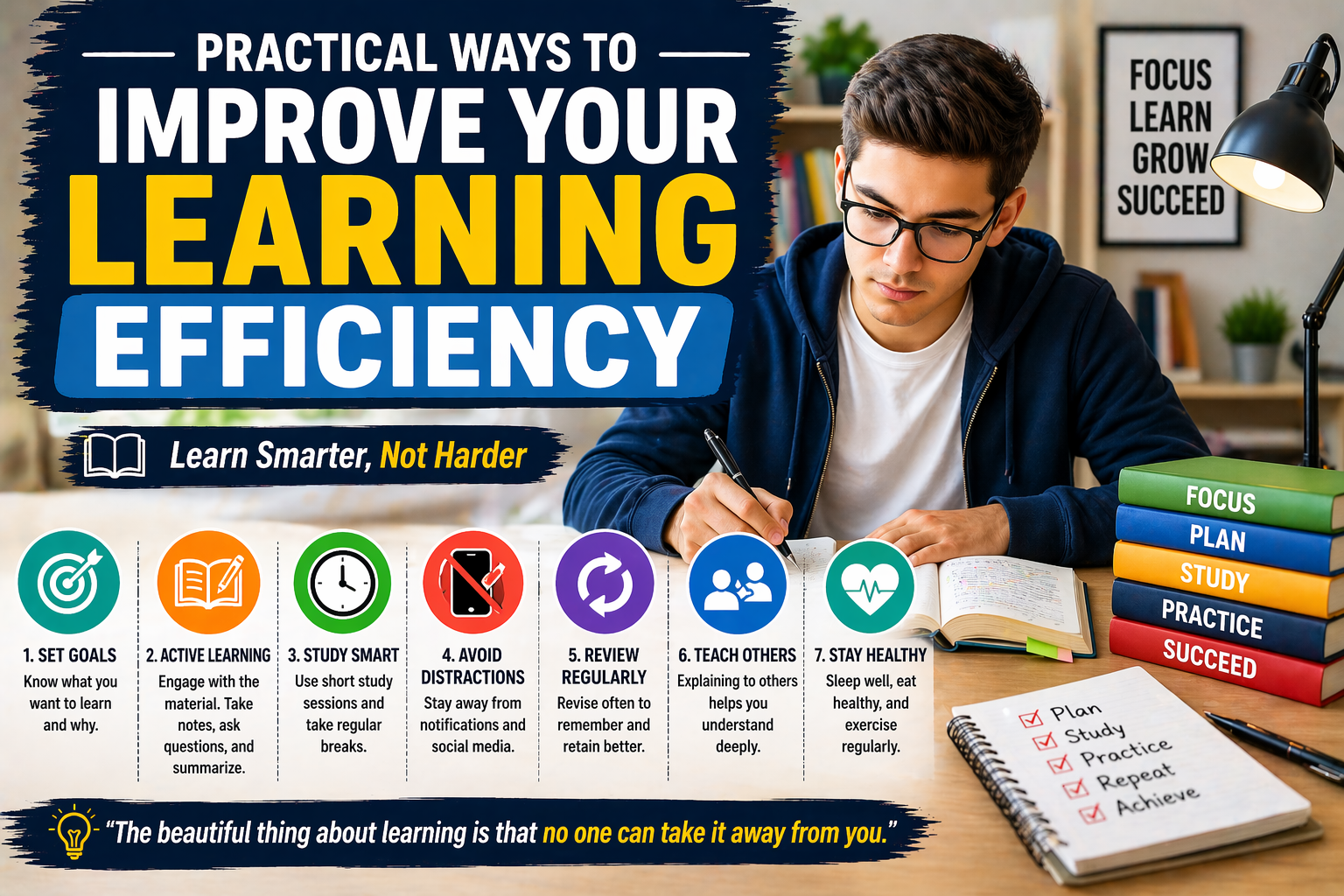
Practical Ways to Improve Your Learning Efficiency
Learning efficiently is not about spending more time studying it is about using the right methods.
Ways of Learning Efficiency
When you improve your learning efficiency, you understand and remember information better, and you do it in less time.
Set Clear Learning Goals
Define what you want to learn before you start.
Clear goals keep you focused and motivated.
For example, instead of saying I want to study English, you can say I want to learn 10 new words today.
Use Active Learning Techniques
Instead of just reading, engage with the material by taking notes, asking questions, and summarizing key points.
Active methods like writing summaries, making flashcards, solving practice questions, or drawing mind maps keep your brain working not just watching.
A student who writes key points in their own words can recall them far better than one who simply reads the page.
Study in Short Sessions
Long study hours can reduce focus.
Break your study time into shorter sessions with small breaks.
This approach often called the Pomodoro method uses cycles like 25 minutes of study, then a Last minute break.
Someone who studies for 25 minutes, rests, then repeats can finish more in two hours than someone who sits for three hours straight without stopping.
Avoid Distractions
Choose a quiet place and turn off notifications to improve concentration.
Small things like phone alerts, social media, background noise, or an open browser tab can break your focus in seconds.
A person who puts their phone in another room can finish a task in half the time.
Revise Regularly
Revising helps transfer information from short term to long-term memory.
Space your revision across days, then weeks not just the night before a test.
A learner who reviews a lesson after one day, then again after three days, retains far more than one who only reads it once.
Teach What You Learn
Explaining concepts to others helps you understand them better.
You can teach a friend, record a short video, or even explain the idea out loud to yourself.
When you try to explain photosynthesis to a younger sibling and they ask but why you quickly find out what you truly know and what you still need to review.
Stay Healthy
Proper sleep, nutrition, and exercise improve brain function and learning ability.
Simple habits like sleeping 7–8 hours, drinking enough water, eating balanced meals, and taking a short walk makes a real difference to how well your brain works.
A student who sleeps well the night before an exam can recall answers more clearly than one who stays up all night cramming.
Performance Of Learning
Improving your learning efficiency can save time and boost your performance.
Apply these simple strategies and make your learning process more effective.