Smart Ways to Improve Your Decision-Making Skills
Decision-making is a crucial skill in everyday life.
From small daily choices to important life decisions, the ability to make the right decision can lead to success and growth.
Good News For Decision-Making
The good news is that decision-making is a skill you can improve with practice.
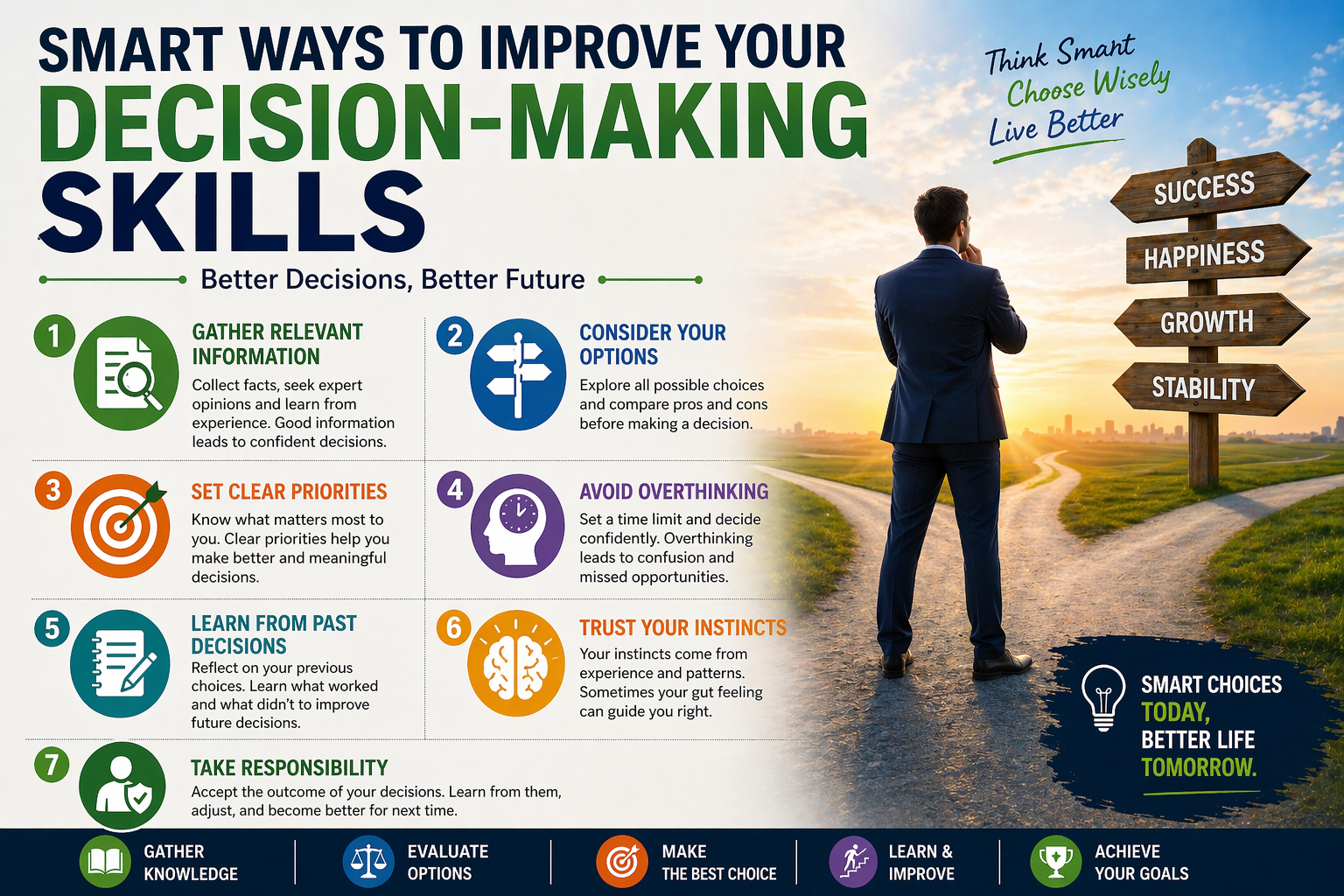
Gather Relevant Information
Before making any decision, collect the necessary information.
Avoid making decisions based on incomplete knowledge.
Good sources include facts, expert opinions, personal experience, and honest feedback from trusted people.
Someone who researches two job offers carefully comparing salary, growth, and work environment can make a far more confident choice than one who decides on impulse.
Consider Your Options
Think about all possible choices and compare their advantages and disadvantages.
Never lock yourself into the first option you see there is almost always a better path, a middle ground, or a completely different angle worth considering.
A student choosing between two universities can list the pros and cons of each side by side and instantly see which option fits their goals better.
Set Clear Prioritise
Understand what matters most to you.
This will help you make better and more meaningful decisions.
When your values, goals, and long-term needs are clear, confusing choices become much simpler to sort through.
Someone who knows that family time is their top priority can turn down a high paying job with excessive travel without any regret.
Avoid Overthinking
Thinking too much can create confusion.
Set a time limit and make a decision confidently.
Overthinking often leads to fear, delay, self-doubt, and missed chances rather than better outcomes.
A professional who gives themselves 24 hours to decide on a business proposal can move forward clearly while one who keeps thinking for a week can lose the opportunity entirely.
Learn from Past Decisions
Reflect on your previous decisions to understand what worked and what did not.
Every past choice good or bad carries a useful lesson about your thinking style, blind spots, and judgment under pressure.
Someone who reviews a poor financial decision honestly can identify exactly where they went wrong and avoid repeating the same mistake next time.
Trust Your Instincts
Sometimes your instincts can guide you in the right direction, especially when you have enough experience.
Your gut feeling is not random it is your brain processing years of experience, patterns, and signals faster than conscious thought can.
An experienced teacher who instantly senses that a student is struggling even before any test result can step in early and make a real difference.
Take Responsibility
Accept the outcome of your decisions and learn from them.
Blaming others or outside conditions keeps you stuck but owning your choices gives you the power to grow, adjust, and decide better the next time.
Someone who says I made that choice and here is what I can learn from it grows faster than one who spends energy explaining why it was not their fault.
Importance Of Decision-Making
Improving decision-making skills takes time and experience.
By following these simple strategies, you can make smarter choices and build a better future.