Practical Techniques To Improve Your Decision-Making Skills
Every day brings decisions that shape both your personal and professional life.
Good decision-making helps you avoid unnecessary stress, solve problems efficiently, and move steadily closer to your goals.
Decision-Making Skills
By improving the way you think and evaluate situations, you can make smarter, more confident choices even under pressure.
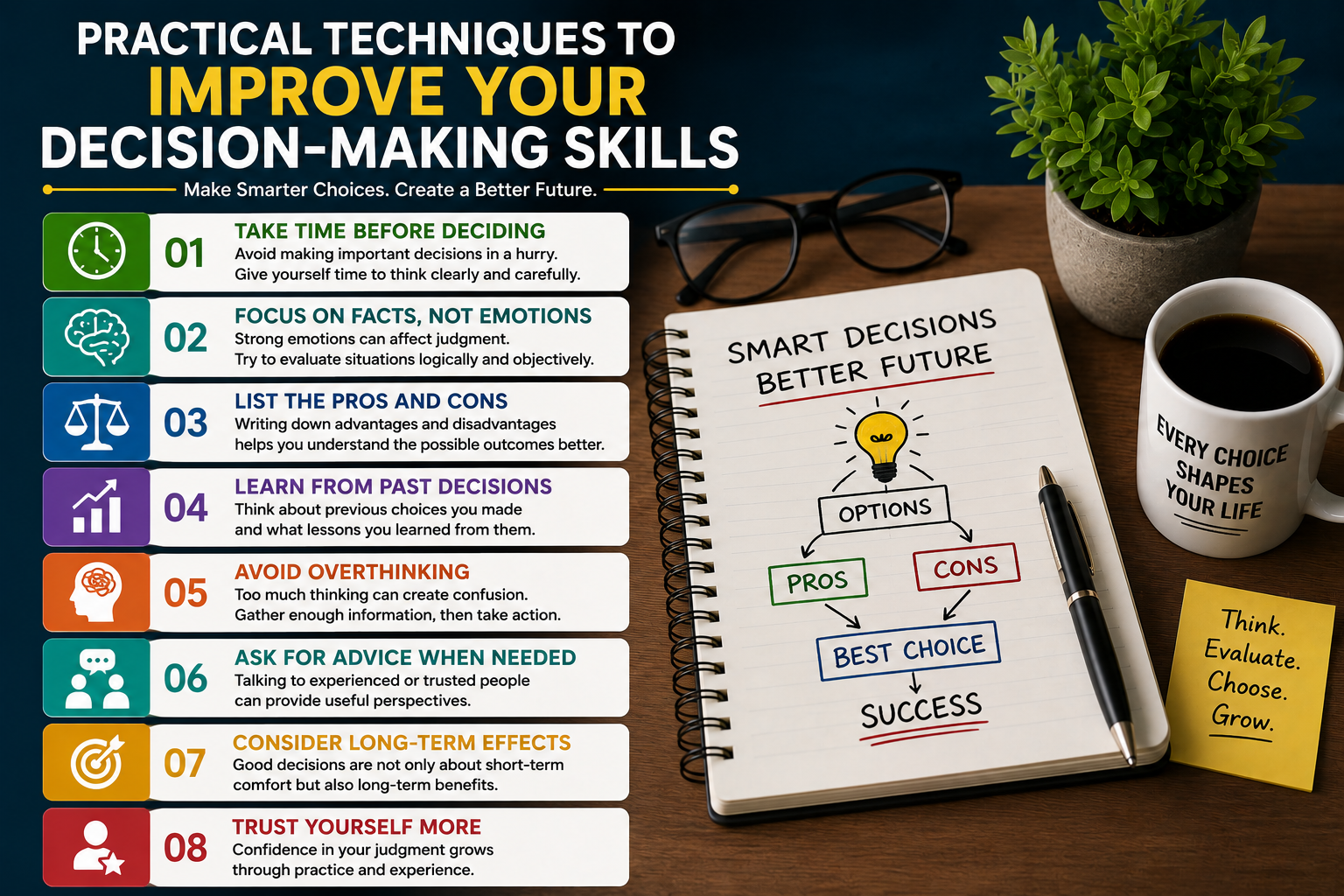
Take Time Before Deciding
Rushed decisions rarely produce the best results.
When something important is at stake, give yourself time to think clearly and without pressure.
A few hours or even a single night of reflection can completely change the quality of your final choice.
A professional who sleeps on a major career decision before responding can approach the next morning with a clearer head and a more grounded answer.
Focus On Facts, Not Emotions
Strong emotions fear, excitement, anger, or pride can quietly distort your judgment without you realising it.
Train yourself to pause, separate how you feel from what is actually true, and evaluate the situation as objectively as possible.
A person who waits until frustration has passed before replying to a difficult message can respond with far more accuracy and less regret than one who reacts immediately.
List The Pros And Cons
Putting advantages and disadvantages on paper moves the decision out of your head and into a form you can actually examine.
Seeing both sides written clearly often reveals priorities and risks that felt invisible while everything was still in your mind.
A student who lists the benefits and drawbacks of two course options before choosing can make a decision grounded in real comparison rather than passing preference.
Learn From Past Decisions
Your previous choices both good and poor carry lessons that no book or advice can fully replace.
Ask yourself what went right, what went wrong, and what you would do differently.
Real wisdom grows from your own story.
A professional who reviews one past decision each week and identifies what she would do differently can sharpen her judgment faster than someone who never looks back.
Avoid Overthinking
Gathering information is necessary, but endlessly analysing every detail leads to confusion, not clarity.
Collect enough facts to understand the situation well, then commit to a direction and move forward.
A person who sets a personal deadline for reaching a decision can break the cycle of circular thinking and act with confidence rather than waiting for perfect certainty that never arrives.
Ask For Advice When Needed
No one has a complete view of every situation. Talking to someone experienced, trusted, or simply outside the situation can offer perspectives you had not considered.
Good advice does not make the decision for you it simply gives you better material to work with.
A young professional who consults a senior colleague before accepting a new role can uncover practical realities about the position that no job description ever mentions.
Consider Long-Term Effects
Comfortable short-term choices do not always serve your long-term interests.
Before deciding, ask yourself how this choice will look in one year, five years, or beyond.
Decisions made with the future in mind tend to age far better than those made purely for immediate ease.
A student who chooses a demanding course over an easier one because it aligns with long-term career goals can look back years later and recognise it as one of the best decisions she ever made.
Trust Yourself More
Self-doubt is one of the most common obstacles to good decision-making.
Confidence in your own judgment does not appear overnight it grows through repeated practice, honest reflection, and the experience of both success and recovery from mistakes.
A person who deliberately makes small daily decisions without second-guessing them can build the quiet internal confidence needed to handle larger and more consequential choices with steadiness.
Decision-making Is A Skill
Decision-making is a skill that sharpens with patience, practice, and honest self-reflection.
Apply these practical techniques consistently, and you will find yourself making better choices, carrying less stress, and building a future shaped by clear thinking rather than chance or impulse.