
Simple Ways to Improve Your Time Management Skills
Time management is a key skill that helps you stay organized, reduce stress, and achieve your goals.
Ways of Time Management Skills
Many people struggle with managing their time effectively, but with a few simple changes, you can make a big difference in your daily routine.
Set Clear Priorities
Start by identifying your most important tasks.
Focus on what truly matters instead of wasting time on less important activities.
A simple method is to label your tasks as urgent, important, can wait, or can skip and then start from the top.
Someone who picks their top three most important tasks every morning and finishes those first can end the day feeling productive, even if the rest of the list stays untouched.
Create a Daily Plan
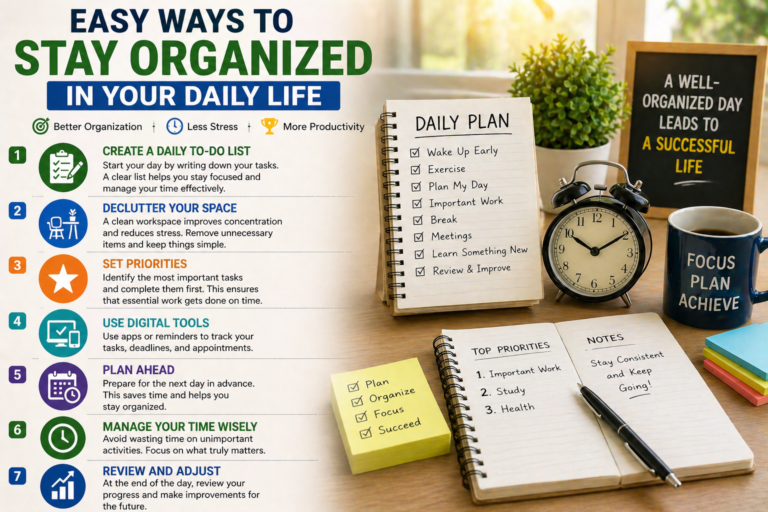
Plan your day in advance by making a to do list.
This keeps you organized and helps you stay on track.
Your plan does not need to be complicated a simple list in a notebook or a free app like Google Tasks, Notion, or Todo list works perfectly well.
A person who spends just 5 minutes the night before writing out the next day’s tasks can wake up with a clear direction instead of wasting the first hour figuring out where to start.
Avoid Procrastination
Delaying tasks can create stress and reduce productivity.
Try to complete your tasks on time.
One simple trick is the two minute rule if a task takes less than two minutes, do it right now instead of adding it to a list.
Someone who keeps pushing a small but important email to later can watch it grow into a source of daily stress, while sending it in two minutes clears the mind completely.
Use Time Blocks
Divide your day into time blocks for different activities.
This helps you stay focused and manage your time better.
You can block time for deep work, emails, meetings, learning, exercise, and rest each activity gets its own dedicated slot.
A student who blocks 9–10 AM strictly for studying, 10–10:15 for a break, and 10:15–11 for revision can cover far more ground than one who studies randomly whenever they feel like it.
Limit Distractions
Turn off notifications and avoid unnecessary interruptions while working.
The biggest hidden time wasters are usually phone alerts, social media pop-ups, unnecessary conversations, and multitasking each one breaks your focus and costs you more time than it seems.
Someone who puts their phone on silent and closes all unrelated browser tabs can finish a one hour task in 40 minutes simply because their attention stays in one place.
Take Breaks
Short breaks improve focus and prevent burnout. Balance work with rest.
Working non-stop actually slows your brain down short breaks of 5 to 15 minutes between sessions refresh your mind and bring your focus back stronger.
A person who works for 45 minutes and then takes a 10 minute walk can return to their desk with more energy and sharper thinking than someone who sits for 3 hours straight without stopping.
Review Your Day
At the end of the day, check what you have completed and plan for the next day.
This simple habit of reviewing, reflecting, adjusting, and planning ahead takes only 5 to 10 minutes but makes the next day far more productive.
Someone who spends 5 minutes every evening asking what I finished, what did I miss, and what comes first tomorrow can walk into the next morning with confidence and zero confusion.
Importance Of Time Management Skill
Improving time management takes practice, but it leads to better productivity and a more balanced life.
Start applying these tips today and see the difference.